How to choose a beauty salon in Pristina
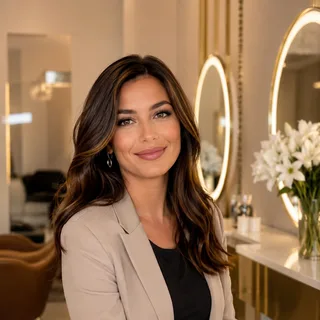
In a market where few salons publish prices and addresses, the choice comes down to a few practical criteria you can test before sitting in the chair.
Before you search: define what you are buying
The wrong salon choice usually starts with a vague requirement. "I want to look good" is not an order, it is a hope. Before opening Instagram, answer three questions for yourself: which service exactly (cut, colour, balayage, makeup, facial), for which date, and with what budget ceiling. These three answers turn the search from endless scrolling into a short list of candidates.
Then ask yourself how much the outcome matters. A failed blow-dry is forgotten after the first wash; a failed balayage accompanies you for months. The bigger the risk, the more the criteria below weigh and the more a preliminary trial is worth. For small services a reasonable salon near you is enough; for transformations seek the best you can find, even if it means waiting or travelling further.
The five criteria at a glance
- Does it offer the services you need together? If you want hair and makeup, the list narrows a lot: many known salons are hair only.
- Does it give prices when asked? A clear written price before the appointment is the best sign of seriousness. A public list, like the one B&B Elegance has, is even better.
- Look at published work, not just follower counts. Seek photos of real client work, not only promotional posts.
- Test the communication. How fast do they answer on WhatsApp? Do they ask about your hair or skin before quoting? Pre-appointment communication predicts the in-salon experience.
- For big work, do a small trial. Before a balayage or a transformation, test the salon with a blow dry or a cut.
The criteria explained in depth
Service coverage is the first filter because it is a fact, not a taste. Etrit Hair itself says it does no makeup; VOGUEhair is hair-only; estethica is a skin clinic with no hair at all; Serpent Claws works only on nails. If your day needs hair and makeup together, the real candidates are the wide-range houses like B&B Elegance, Passion or Njomza. This single filter saves you half of the pointless conversations.
Price transparency is measured with one message. Only B&B Elegance has a public list, so for everyone else the test is how they answer when asked: a clear written figure, with what it includes, is the top mark; "come and we will discuss it at the salon" with no range at all is the bottom one. A salon that gives you a clear price before it has ever seen you is showing you how it treats clients.
Published work is read with three questions: Are there before-and-after photos, or only curated results? Is the work from recent months, or has the profile gone quiet? Do the clients in the photos resemble your case, hair like yours, your age, your request? A hundred thousand followers answer none of these; ten precise photos answer all three.
Communication and the small trial are two sides of the same criterion: certainty before commitment. The first message shows speed and care; the questions the salon asks you show professionalism; and a trial blow-dry shows everything else, from hygiene to punctuality, at the lowest possible cost. Whoever passes both tests deserves your transformation.
The red flags in communication
These flags are general and apply to any salon anywhere, not to any particular name. None is a verdict by itself, but two or three together should be taken seriously.
- A price with no questions. Whoever quotes a balayage without seeing your hair and without asking about old colourings is either guessing or planning to correct the price at the chair.
- Refusing written confirmation. Date, hour and price in one message are the minimum of an agreement. Whoever avoids it is keeping a free hand for changes.
- Vague answers on what is included. If after two questions you still do not know whether toner and blow-dry are in, the final bill will surprise you.
- Pressure to decide fast. "Only today at this price" is a sales technique, not care for your hair. A good appointment needs no panic.
- No address, no pin, no time. Whoever cannot tell you clearly where and when to expect you is unlikely to be more organised once you are in the chair.
The questions to ask every salon before you book
- How much is the service for my hair, with these photos, and what does the price include?
- How long does it take and who exactly will do the work?
- What products do you work with for this service?
- What happens if the result is not as agreed: do you correct it?
- Can you confirm the date, hour and price for me in one message?
- How should I come prepared: washed or unwashed hair, no makeup, anything else?
Three scenarios, three strategies
The visitor with one week in town has no time for trials. Her strategy: two or three candidates from the ranking, the same message with photos to each, and the decision goes to whoever replies fastest and most precisely. She puts the big service in the first days of the stay, so time remains for a fix if needed, and confirms everything in writing before travelling.
The bride or the wedding guest chooses with the calendar in hand. Her date is rigid, so she books earlier than everyone, three or four weeks for a July Saturday, and favours the salons that cover hair and makeup together, so the day does not get chopped across addresses. The preliminary trial here is not a luxury but insurance: a trial hairstyle weeks ahead shows her and the stylist the same thing.
The local looking for her permanent salon has the luxury of time and uses it: a trial rotation with small services across two or three salons, a few weeks apart, and a calm comparison of communication, hygiene and result. The winner gets her loyalty, and loyalty pays back with easier appointments, remembered shades and that feeling no new salon can give on a first visit.
After the first visit: evaluate and decide
The choice does not end when you leave the salon; it ends a week later, when you see the result in real life. The cut looks different after the first wash at home, the colour shows its endurance after two or three washes, and the event hairstyle is judged by the evening's photos. Keep a short note: what you asked for, what you got, what it cost, how you felt. Four lines that after two or three salons become your personal map of the market.
And when you find the right salon, invest in the relationship: book in time, do not no-show, say openly what you liked and what you did not. The client who communicates clearly gets any salon's best work, anywhere in the world, and Pristina is no exception.
How to use our ranking
Our ranking is a starting point, not a ready-made decision. It comes from five reviewers with different beats, who ranked all 15 salons with scores from 1 to 15, each used only once; no salon pays for a place. But our panel does not know your hair, your budget and your date. So the smart scheme is: take the two or three highest names that cover your service, run them through this page's criteria, and let the decision rest on the dialogue, not the table.
And remember that category matters: hair salons, beauty houses, nail studios and a skin clinic compete together in our table. Compare within the category you need. The top five below is the start of that road.
In the end, every good salon choice has the same structure: a clear requirement, two or three candidates compared with the same questions, written confirmation, and a small trial before the big commitment. It requires neither inside connections nor luck; it requires one hour of attention spread across two weeks. That hour is perhaps the highest-return investment in the whole beauty process, because it decides whose hands you will trust your appearance to.
And do not forget the time dimension: the right salon on the wrong date is still the wrong choice. Check the hours from the start, especially Sundays when most rest, and account for the season: in July and August even the best-organised salon works with a full list. The criteria on this page work best when you give them the time they deserve.
Where to start: our top five
| # | Salon | Score |
|---|---|---|
| 1 | B&B Elegance A mother-and-daughter family salon: Besirja on hair with over 20 years of experience and Biondina on facial treatments. Hair, makeup and skin in one visit, with a public price list. | 70 |
| 2 | estethica An aesthetic clinic, the Kosovo branch of the Turkish estethica brand, operating since 2012. Skin-focused: hydrafacial, laser and medical-aesthetic procedures rather than a hair salon. | 69 |
| 3 | FRK Beauty Kosova A big name on social media with around 84 thousand Instagram followers. Offers lashes, microblading, bridal makeup, hair removal and courses. Does not take appointments through the usual channel. | 56 |
| 4 | Etrit Hair A hair salon opened in 2019 by stylist Etrit Tullumi, specialized in colour and balayage. It does not offer makeup. It has its own website with a gallery and team. | 52 |
| 5 | A&L Hair Studio A hair studio run by Lumnije and Agim, with over 30 years of experience and a focus on colour and colour correction. It works by appointment only. | 45 |
Prices and facts change. Confirm directly with the salon before booking.
Frequently asked questions
Which criterion is the most important of all?
Pre-appointment communication, because it summarises the others: whoever answers fast, asks about your case and confirms in writing usually stands well on service, price and organisation too.
Should I trust the ranking or my instinct?
Both, in order: the ranking narrows the list to two or three serious candidates, and your instinct, fed by the photos and the first conversation, chooses among them. No table knows your case better than you.
What if the cheapest price comes from a salon lower in the ranking?
Compare what you get for the difference: on small services the risk is small and the saving legitimate; on transformations, a difference of a few tens of euros does not cover the cost of a failed correction. Decide by the size of the risk, not just the figure.